Common anode LED display screen
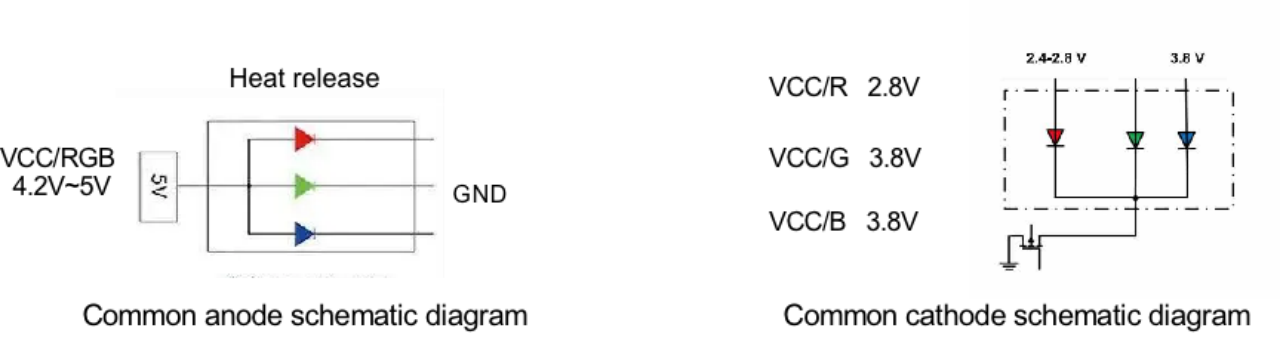
In contrast, a common anode LED screen connects all the anodes of each LED together and to a common terminal, while the cathodes of each LED are connected separately.
Common cathode LED display screen
The common cathode LED screen connects all the cathodes of each LED together and to a common terminal, while the anode of each LED is connected separately.
The common cathode is a energy-saving power supply technology for LED displays, where the current first flows through the LED chip and then reaches the negative electrode of the driving IC, hence name it "common cathode". Using independent voltage supply can reduce voltage drop and current loss. In addition, this technology can separate and accurately power red, green, and blue LED chips.
LED professionals know that the rated power required by the red, green, and blue chips is different, and ordinary power supply methods cannot separate them, but only provide the same power. Using an independent voltage supply can accurately supply power to red, green, and blue LED chips, providing them with different voltages at the same current, ensuring that they operate at rated power, thereby improving energy utilization and reducing energy consumption.
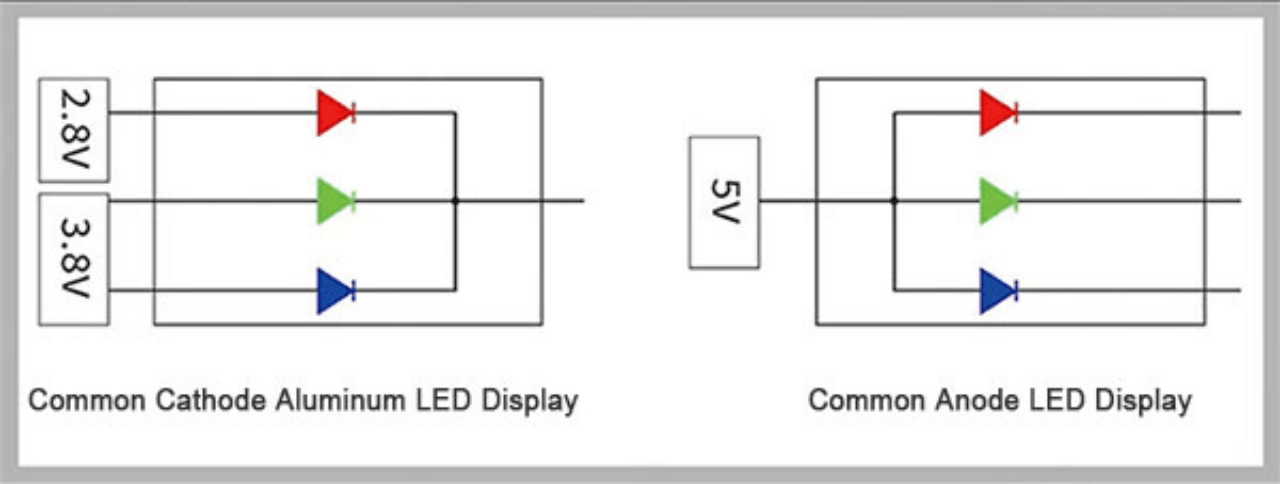
Common Cathode VS Common Anode LED Schematic Diagram:
Common Cathode VS Common Anode LED display, which is better?
In the early stage, LED displays were mostly used for outdoor applications using larger pitch products, which did not have a physical space limit for driver IC as they were designed with static scan drive. However, when LED displays began to be used for indoor applications using smaller pitch products, the space available for electronic components was squeezed, and as a result, dynamic scan drive (line-scanning drive) based on time-division multiplexing (TDM) came into being.
Under line-scanning drive mode, LED displays can be categorized into two types: the common cathode and the common anode.
As the name implies, common anode means individual LEDs are connected via their positive ends and driven by negative ends; and common cathode means individual LEDs are connected via their negative ends and driven by positive ends, and in common cathode mode, R, G, B chips are separately powered with voltage and current precisely distributed to red, green, and red diodes, and the current passes the diodes then to the negative ends of ICs.
Common Cathode VS Common Anode LED Schematic Diagram:
When LED displays originally used separate R, G, B chips, LED drive technology was not a big concern for PCB design engineers. The following stage of LED displays, where RGB chips were encapsulated into one package, changed LED drive technology accordingly. In the fine-pitch era, the importance of common cathode technology increased, especially in sub-1 mm products.
The difference between the common cathode and common Anode
The direction of the current flow:
■ In common anode mode, the current of LED displays flows from PCB to LED diodes, and the RGB LEDs are powered with the same power source at the same power rate, and therefore the forward voltage drop is increased.
■ In common cathode mode, the LED display’s current first passes through LED diodes with R, G, and B LEDs separately powered. Voltage and current are precisely distributed based on individual needs, then to the negative ends of ICs. The forward voltage drop is reduced, and as a result, there is less internal conduction resistance.
The supply voltage:
■ In common anode mode, the LED display provides RGB LEDs with a unified voltage higher than 3.8V (such as 5V), therefore the power consumption is high.
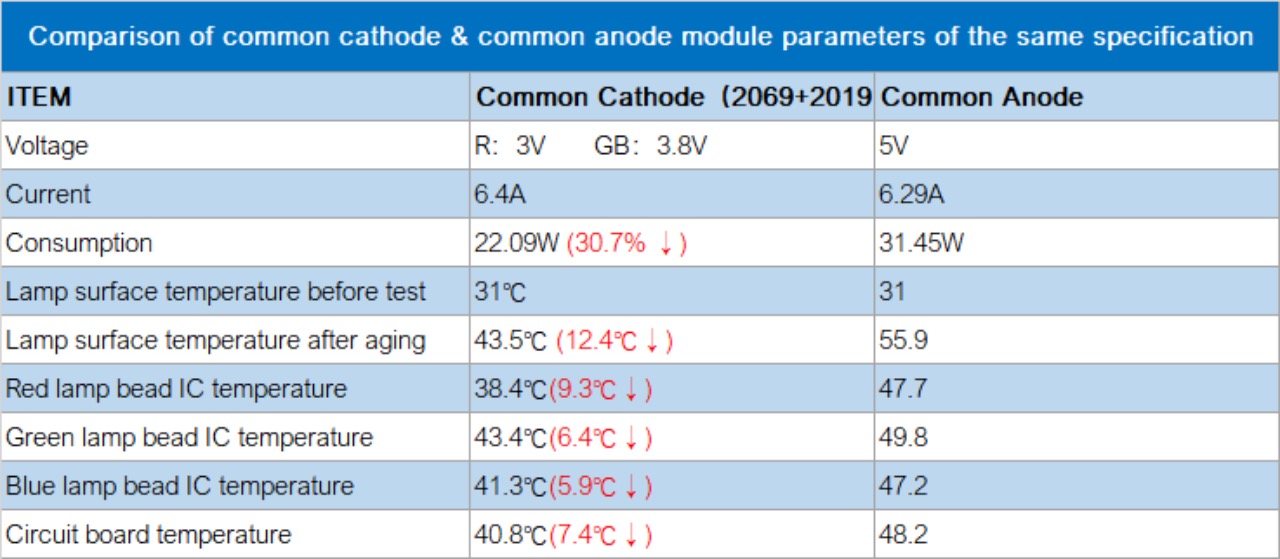
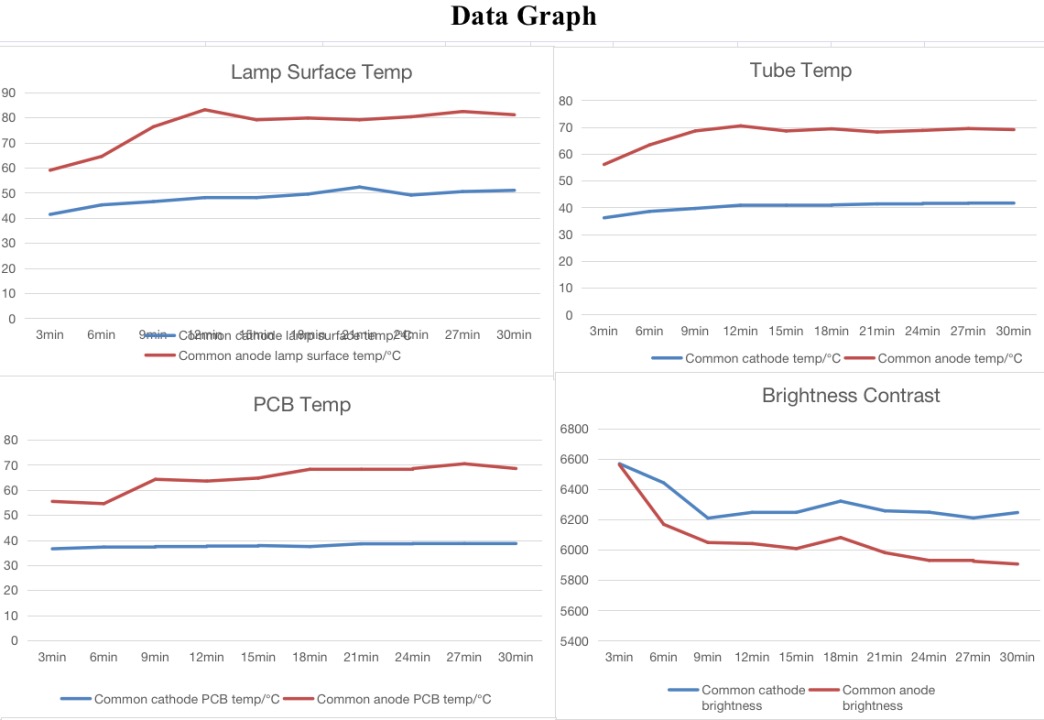
■ In common cathode mode, the LED display provides RGB LEDs with separate voltage based on actual needs (2.8V for the red LED, and 3.8V for the green and blue LEDs). Because of this separate and precise power supply, the power efficiency is higher. Consequently, less heat is produced as less power is consumed.
Energy efficiency and cooling effect
■ Based on accurate power control, common cathode technology can reduce the power consumption of the entire system by reducing the red LEDs’ supply voltage. Moreover, there are no extra line-scanning devices needed to achieve this. By using common cathode technology, LED displays can reduce excessive heat and power consumption, pixel failure rate, and ghost lines (tailing effect), thus improving LED displays’ overall performance
Supply chain
■ Common cathode technology reduces forward voltage drop by reducing the supply voltage of red LEDs, however, this requires the use of more power supplies, which further increases the complexity of the component layout on PCBs. Currently, the key supporting components related to common cathode technology are LED diodes, power supplies, and driver ICs. These components have market-proven solutions for common anode technology but are still in the early stages of common cathode technology.
Energy-saving led display
Assuming that under common anode mode, a 5V voltage is used as the unified power, under common cathode mode a 2.8V is used for red LEDs, 3.8V for the green and blue LEDs, we can save 35%-40% power.
For more info, please contact us freely: EURYLED.Sales@euryled.com